
The Urban Glide Bike 140 occupies a specific niche: an urban electric balance bike with a 350 W brushless motor, limited to 25 km/h, with a claimed range of 20 km. On paper, these specifications place it squarely within the regulatory framework for light mopeds. The question remains whether this technical sheet holds up against direct competitors, and especially where the real differences lie in use.
Controller and Motorization of the Urban Glide 140: What the Technical Sheet Doesn’t Mention
The 350 W brushless motor of the Urban Glide 140 delivers adequate torque for flat or slightly inclined journeys. However, we observe that the original controller significantly limits the smoothness of acceleration. On specialized forums, several users document attempts to replace the controller to gain more driving flexibility, which immediately raises a compliance issue.
A modified controller nullifies the vehicle’s regulatory compliance. Decree No. 2022-31 classifies electric balance bikes as light mopeds, with strict thresholds: maximum power of 350 W and speed limited to 25 km/h. Any modification of the controller or battery that exceeds these limits exposes the owner to fines, and checks in urban areas have intensified in recent years.
The key point to remember for a new purchase: the motorization of the Bike 140 is calibrated to stay within legal boundaries. This is a clear advantage over some imported balance bikes whose software restrictions can be disabled in a few clicks, a feature that can turn into a legal trap. The comparison provided by ABC Sports also details the differences in motorization between competing models.
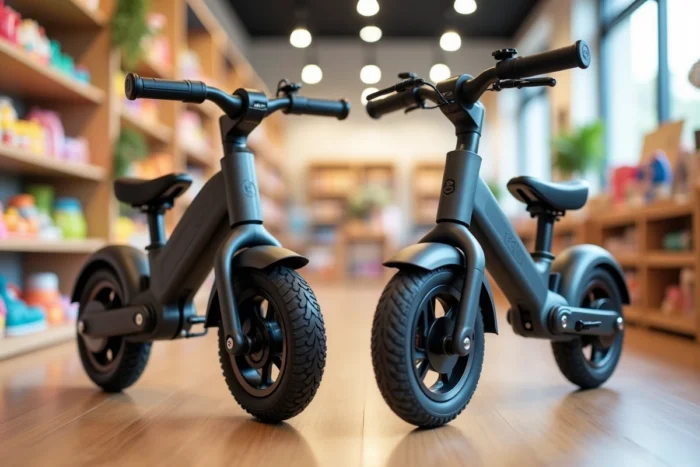
Actual Battery Range: Urban Glide 140 vs. Its Competitors
The claimed range of 20 km corresponds to ideal conditions: moderate rider weight, flat terrain, mild temperature. In everyday urban use with frequent stops and restarts, we recommend estimating a lower actual range.
The lithium-ion battery remains the critical expense item on this type of vehicle. On the Urban Glide 140, the battery pack is integrated into the frame, which limits replacement options with a higher-capacity model without heavy technical intervention. Some owners on Esprit Roue forums explore battery upgrades, but these modifications also require changing the controller, with the risks of non-compliance mentioned earlier.
Among competitors in the same price range, the situation is comparable. Most adult electric balance bikes offer a similar claimed range, between 15 and 25 km depending on the manufacturers. The real difference lies in the chemistry of the cells and the thermal management of the pack, two parameters rarely documented in consumer product sheets.
Criteria to Check Before Purchase
- The nominal voltage and capacity in Wh of the battery, not just the range in kilometers claimed by the manufacturer
- The possibility of replacing the battery without disassembling the frame, a point that conditions the actual lifespan of the vehicle
- The total charging time: a long cycle (over four hours) complicates use for round trips in the same day
Light Moped Certification: A Determining Purchase Criterion
Only L1e-B certified balance bikes can legally circulate on public roads. This point, often relegated to the bottom of the page in comparisons, should be at the top of the selection criteria. The Urban Glide 140 meets the thresholds of Decree No. 2022-31 (350 W, 25 km/h), making it compliant with the framework for light mopeds.
The problem arises with models sold on marketplaces without clear certification mention. An unapproved balance bike purchased on an import platform can be seized during a check, with no recourse for the buyer. We observe that inspections have multiplied in large urban areas, particularly targeting vehicles whose restrictions seem dubious.
For the buyer, verification is simple: the certificate of conformity must accompany the vehicle, and the certification number must be legible on the manufacturer’s plate. If the seller does not provide this document, move on.
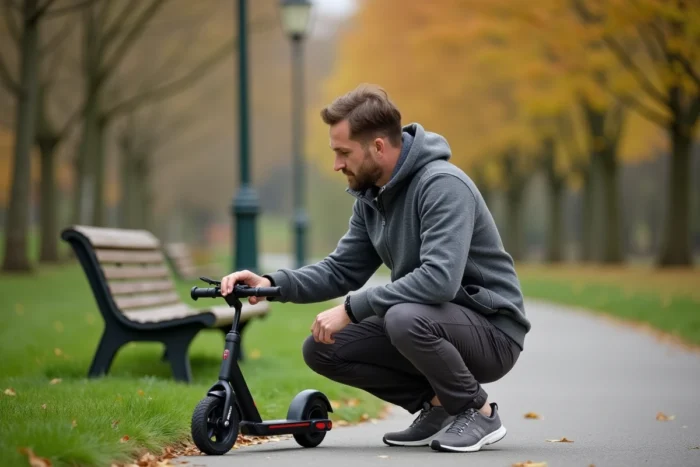
Urban Glide 140 or Competing Balance Bike: Decide Based on Actual Use
The choice between the Urban Glide 140 and a competitor like the Urban Glide 160 or the Wispeed Wimob primarily depends on the type of journey. For short trips (less than five kilometers one way), the Bike 140 offers a compact size and manageable weight that facilitate carrying in a lobby or hallway.
For longer distances or hilly routes, the wheel diameter and battery capacity become the distinguishing factors. Models equipped with larger wheels better absorb road irregularities and maintain a more stable cruising speed, at the cost of increased bulk.
Comparison Table of Key Points
| Criterion | Urban Glide 140 | Direct Competitors |
|---|---|---|
| Motor Power | 350 W brushless | 250 to 350 W depending on model |
| Maximum Speed | 25 km/h (limited) | 25 km/h (limited, if certified) |
| Claimed Range | 20 km | 15 to 25 km |
| L1e-B Certification | Yes | Variable depending on seller |
| Removable Battery | No (integrated into the frame) | Yes on some models |
This table highlights a often overlooked point: the removability of the battery differentiates models more than motor power, which is identical on most compliant balance bikes. A removable pack simplifies charging at the office and extends the overall lifespan of the vehicle.
The Urban Glide 140 remains a solid choice for short and regular urban use, provided you do not seek to modify it. Its main advantage over cheaper alternatives is its documented compliance. For a daily journey of a few kilometers in the city, this is often the criterion that makes the difference between a sustainable purchase and a vehicle that becomes unusable after a road check.