
A plain white wall lacking character, a raw wood piece of furniture bought in a kit, an entryway where everything piles up illogically: we often start with a concrete annoyance when diving into DIY decor. The good news is that personalizing your interior doesn’t require a professional workshop or a hefty budget. However, it is essential to choose the right materials, anticipate air quality after work, and know where to find items without buying everything new.
Air Quality and DIY Materials: The Reflex to Adopt Before Painting
We rarely start a decor project thinking about ventilation. Yet, as soon as we open a can of paint, a varnish, or a tube of glue in a closed room, we release volatile organic compounds (VOCs). In France, construction and decoration products carry a regulatory label ranging from A+ to C, with A+ corresponding to the lowest emissions.
Before applying anything to a piece of furniture or a wall, check this label on the packaging. Feedback varies on this point, but water-based paints rated A+ remain the safest choice for indoor use, especially in a bedroom or poorly ventilated space.
When it comes to reclaimed materials (pallets, old wood, sheet metal), the risk comes from previous treatments: old stains, insect-repellent products, lead paint residues on items dating from before the 1990s. Sanding without a mask in a living room is exactly the kind of situation to avoid. When reclaiming wood, sand outdoors and apply an A+ rated varnish before bringing the piece inside.
To find tutorials and ideas for creations suited to a healthy interior, you can check bricolesdelouve.com, which gathers accessible and well-documented DIY projects.
Reclaiming Furniture and Objects Through Reuse Channels
Reuse is no longer limited to Sunday flea markets. The AGEC law now requires retailers to accept the free return of several categories of items, including furniture, bedding, and certain DIY and gardening products. The Ecomaison network coordinates this collection on a national scale.
In practical terms, when you want to personalize a space without buying everything new, you can:
- Drop off an old piece of furniture at a store and leave with another in a reusable condition, often offered at a free or very reduced price
- Collect wood scraps, handles, table legs, or hardware elements from local resource centers
- Direct non-repairable items towards recycling rather than the landfill, which also feeds the stock of raw materials for DIY
Reclaimed furniture offers finishes and wood types that are unavailable in stores. A turned chair leg from the 1960s, a solid oak drawer, a varnished pine closet door: these elements become the foundation of a unique project.
Transforming a Reclaimed Piece of Furniture Without Expensive Tools
You don’t need an orbital sander to give new life to a dresser. Medium-grit sandpaper, a primer, and a matte paint are sufficient for most wood or melamine furniture.
The point not to overlook: the primer ensures the paint adheres to smooth surfaces. Without it, the color will chip within weeks on melamine or varnished wood. Apply a thin layer, let it dry overnight, then apply the color.
DIY Wall Decoration: Paper, Wood, and Textiles Without Drilling Everywhere
Hanging a frame requires a drill and a suitable bit for the wall. When renting your home or wanting to avoid holes, the alternatives are more numerous than one might think.
Colored masking tape allows you to create geometric patterns directly on the wall, leaving no trace upon removal. You can draw straight lines to form diamonds, frames, or friezes, and adjust the color to match the rest of the room.
For textile creations, a simple embroidery hoop stretched with patterned fabric becomes a lightweight wall art piece that can be fixed with adhesive tabs. You can group three or four circles of different sizes to dress a wall above a sofa.
Creating a Gallery Wall Without Rigid Alignment
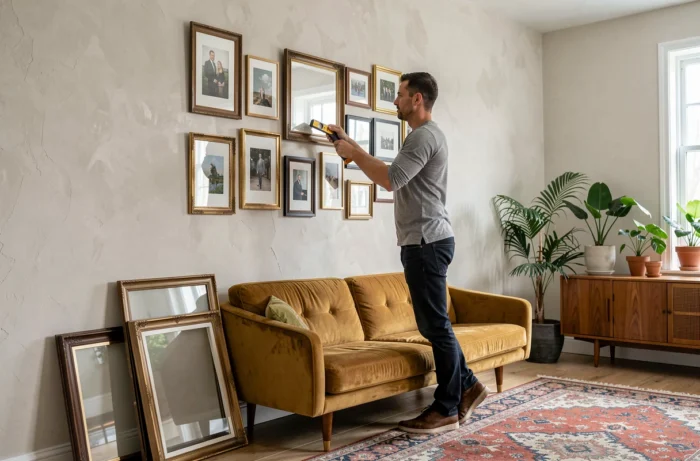
A common mistake is wanting to align all frames to the millimeter. A successful gallery wall plays with varied formats (A5, A4, square) and irregular spacing. Before drilling, cut out the dimensions of each frame from newspaper and attach them to the wall with tape.
This paper mock-up prevents unnecessary holes and allows you to test the layout by stepping back a few paces. Move, adjust, and only drill once satisfied with the result.
Selling or Giving Away Your DIY Creations: What the Regulations Say
Making an item for yourself is free. Selling or giving it away in an organized setting (market, online shop, association) changes the game. European regulation 2023/988 strengthens the requirements for risk analysis, documentation, and traceability for products made available to the public.
The fact that a decorative item is handmade does not exempt you from checking its safety. A raw wood candlestick sold on a platform must withstand heat. A children’s mobile given away at a Christmas market must comply with standards regarding small detachable parts.
- Document the materials used (type of wood, paint, glue) and keep the labels
- Check compliance with safety standards applicable to the product category (toy, lighting, textile)
- Label the item or its packaging with your contact information to ensure traceability
Creating to give away or sell involves manufacturer responsibility, even on a small scale. Keep a record of each batch of paint and each material supplier, especially if selling online.
DIY decor becomes more interesting when it goes beyond mere aesthetic gestures. Choosing A+ paint, reclaiming furniture through a reuse channel, or documenting your creations before selling them—these technical details make the difference between a shaky project and a personalized, sustainable interior.