
The API method applied to diet menus is based on a triptych that online content varies greatly: adaptation, planning, individualization. Some sites see it as a macronutrient distribution grid, while others view it as a complete program for dietary rebalancing. This lack of a stabilized definition merits a closer look at what the method can concretely simplify in organizing meals over a week.
API Method and Meal Planning: How Digital Tools Change the Game
A less explored angle by competing articles concerns the relationship between the API method and nutrition applications that use programming interfaces (APIs) to generate menus. Services like CalorieAPI or TheMealDB allow for cross-referencing food databases with individual parameters: caloric goal, allergies, dietary preferences.
The idea is not to delegate all thinking to an algorithm. Rather, it is to reduce the time spent searching for recipes compatible with a specific nutritional framework. When we know that meal planning remains the main barrier to sticking to a diet over several weeks, automating the recipe search frees up time for actual preparation.
In practice, these tools offer suggestions based on simple filters: type of protein (chicken, lentils, cottage cheese), target caloric intake, preparation time. The result resembles a shopping list generated in a few minutes rather than an hour of manual searching. To delve deeper into this principle of constructing structured weekly menus, the API method on Fiteo details the steps of this logic applied to dieting.

Creating a Weekly Menu Without Falling into Generic Templates
Most weekly menu grids published online share a flaw: they offer interchangeable meals from one person to another. Chicken-broccoli on Monday, salmon-quinoa on Wednesday. A standardized menu does not take into account real constraints: tight budget, limited cooking time of twenty minutes in the evening, children who refuse certain textures.
The API method, in its “individualization” component, encourages building the menu around these constraints rather than treating them as exceptions. This means starting from what you already have in the refrigerator and what you know how to cook, not from an ideal list of weight-loss foods.
Reusing Leftovers as a Simplification Lever
A point rarely addressed in diet guides: planning the week by integrating the reuse of leftovers reduces the number of recipes to prepare. A batch of cooked lentils on Sunday can serve as a base for a salad on Monday noon and a curry on Wednesday evening.
This approach has a dual effect. It decreases the volume of weekly shopping and reduces the mental load associated with meal choices. The API framework then functions less as a program to follow and more as a quick decision grid:
- Ensure that each meal contains a source of protein (meat, legumes, cottage cheese, eggs) and a portion of vegetables or fruits
- Reuse a prepared ingredient in large quantities for at least two different meals during the week
- Adjust carbohydrate portions according to daily physical activity rather than setting the same threshold each day
Limitations of the API Method for Sustainable Weight Loss
Structuring menus around three axes (adaptation, planning, individualization) remains a sensible framework. However, the API method does not constitute a medical protocol. The content circulating online does not mention any scientific publication associated with this term, and no official health organization references it.
For a healthy person looking to rebalance their diet and organize their meals for the week, the framework works as a planning tool. The available data does not allow for conclusions about its effectiveness compared to other structured approaches (classic dietary rebalancing, personalized dietary follow-up).
When the API Method is No Longer Enough
Several situations justify going beyond the framework of a self-constructed menu:
- A weight loss goal exceeding a few kilos, which requires medical or dietary follow-up
- Pathologies (diabetes, kidney disorders, multiple allergies) where meal composition must be validated by a professional
- A complicated relationship with food, where rigid planning may reinforce restrictive behaviors rather than soften them
In these cases, support from a dietitian remains the reference. The API method can serve as a support for this guidance, not as a substitute.
Budget and Shopping: The Concrete Test of an API Menu Over Seven Days
The promise of simplification is most evident at the time of the shopping list. A menu constructed according to the API logic, with ingredient reuse and limited recipe rotation, generates a shorter list than a menu where each meal is independent.
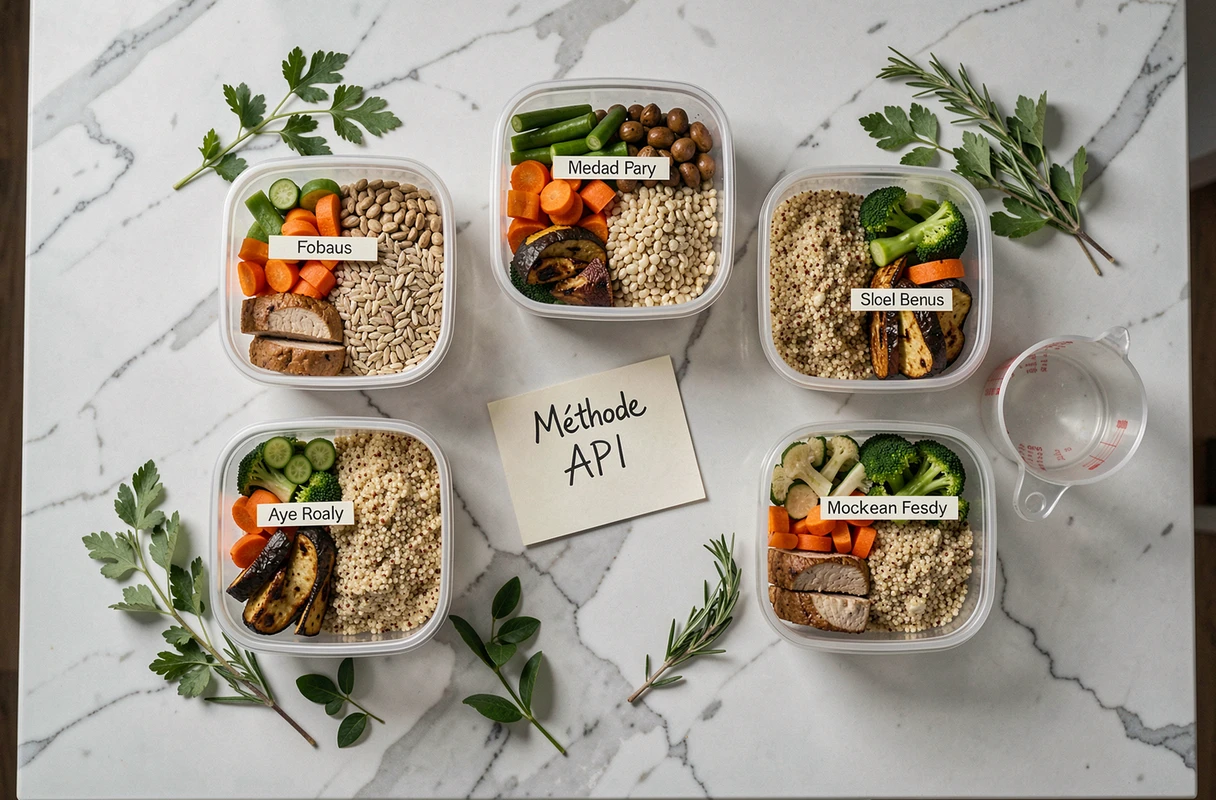
Specifically, working with a base of five or six protein ingredients for the week (chicken, eggs, lentils, cottage cheese, fish) and three or four types of seasonal vegetables allows for covering most meals without multiplying purchases. Fewer different ingredients means less waste and a quicker checkout.
The time savings are also measurable in preparation. By grouping cooking sessions (batch cooking on Sunday, for example), the daily load is reduced to assembling already prepared components. This is not unique to the API method, but the planning framework it offers lends itself particularly well to this.
The API method functions as a decision filter for weekly diet menus, not as a miracle solution for weight loss. Its value lies in reducing the mental load of food choices and organizing shopping. For goals that exceed simple rebalancing, the referral to a health professional remains the most reliable approach.