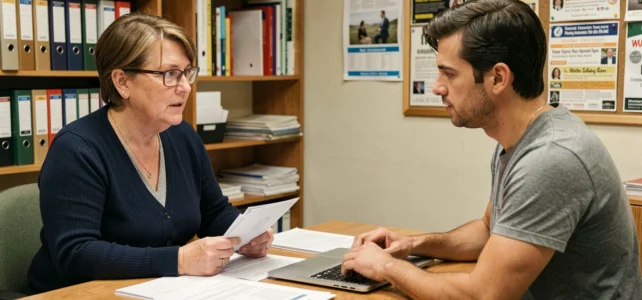
Article L823-9 of the CESEDA constitutes the legal foundation that every helper must master before taking action. This text explicitly protects altruistic humanitarian aid (housing, feeding, caring for, assisting with procedures), provided that no direct or indirect compensation is received. Ignoring this framework exposes one to criminal prosecution for aiding illegal entry or residence. Understanding this legal boundary allows for effective intervention without criminal risk.
Criminal framework for aiding undocumented migrants: what Article L823-9 of the CESEDA allows
The notion of “solidarity offense” has long deterred citizens willing to act. The current wording of the CESEDA now secures humanitarian gestures made without compensation. Specifically, housing a person without a residence permit in your home, accompanying them to a legal appointment, or providing them with meals does not constitute an offense as long as the act is free and altruistic.
The criminal risk remains in two specific cases: facilitating entry into the territory and any assistance accompanied by a financial benefit, even indirect. We recommend that anyone wishing to engage document the gratuitous nature of their intervention, for example by keeping written exchanges or association attestations.
To delve deeper into the concrete mechanisms of aiding undocumented foreigners in France, it is essential to distinguish between occasional support and structured assistance through an authorized association, which offers additional legal protection to both the helper and the helped.
Administrative support at the prefecture: the operational priority

The deterioration of processing times for residence permits at the prefecture represents the first concrete obstacle for individuals seeking regularization. The Defender of Rights has published a report documenting this administrative congestion, which keeps applicants in a prolonged legal void: no right to legal work, no access to full social benefits, no possibility of a rental lease.
The most useful assistance consists of structuring the residence permit application file before the appointment at the prefecture. An incomplete file leads to a delay of several months. We observe that informal refusals at the counter discourage individuals who would have real chances of regularization.
Documents to gather for a regularization application through work
Regularization through work (exceptional admission to residence) requires proof of continuous presence in the territory and professional activity. The file must demonstrate a lasting attachment.
- Proof of presence in France over several years: bills, correspondence from administrations, school certificates for children, bank statements
- Employment contract or job offer from an employer willing to complete the CERFA form for work authorization
- Previous payslips, even from undeclared jobs, accompanied by an employer’s attestation if possible
- Integration documents: language training certificates, participation in associative activities, neighborhood attestations
The employer plays a crucial role. Without their active cooperation to fill out the CERFA and pay the OFII tax, the procedure does not succeed. Helping concretely also means raising awareness among employers about this process.
Access to healthcare: AME and health care access services
The State Medical Aid (AME) remains the only health coverage scheme accessible to individuals without a residence permit. It covers hospital and outpatient care, medications, and laboratory tests. The application is submitted to the primary health insurance fund of the place of residence.
In practice, obtaining AME faces recurring difficulties: the requirement for proof of residence that individuals informally housed do not possess, lack of knowledge about the scheme by some reception agents, refusal of care by some practitioners. Physical assistance at the CPAM counter makes a measurable difference in the success rate of applications.
Health care access services in hospitals
The PASS (health care access services), present in most public hospitals, welcome anyone without social coverage, including before obtaining AME. They provide medical consultations, social support, and referrals to specialists. Directing an undocumented person to the PASS at the nearest hospital is a simple yet impactful gesture.

Legal protection and appeals before the CNDA
For asylum seekers rejected by OFPRA, appealing to the National Asylum Court (CNDA) remains a path to protection. The decree of July 17, 2026, modified the asylum procedure at the border before the CNDA, with implications for deadlines and appeal procedures. Access to a lawyer specialized in immigration law largely determines the outcome of the appeal.
Legal aid covers attorney fees for asylum seekers without resources. Decree No. 2026-474 of June 11, 2026, specifies the conditions for accessing this aid before the CNDA. We recommend consulting a lawyer listed on the bar association specializing in asylum law rather than a generalist, as the technicality of the procedure before the CNDA is high.
Role of authorized associations in legal support
Organizations like Cimade or Gisti have legal clinics where specialized lawyers analyze the administrative situation of each person and identify applicable regularization pathways. These free consultations help avoid two common pitfalls: initiating a procedure unsuitable for the individual’s profile or giving up on an appeal that could succeed.
- Cimade operates in administrative detention centers and offers open reception services
- Gisti publishes updated practical notes on regularization procedures and social rights
- Municipal social action centers (CCAS) can direct individuals to emergency housing and food assistance programs
Effective assistance requires knowledge of the local network of authorized associations and knowing where to direct individuals based on their situation: ongoing asylum application, regularization through work, protection for medical reasons, or family reunification. Each pathway requires distinct expertise, and misdirection can cost months of procedure.