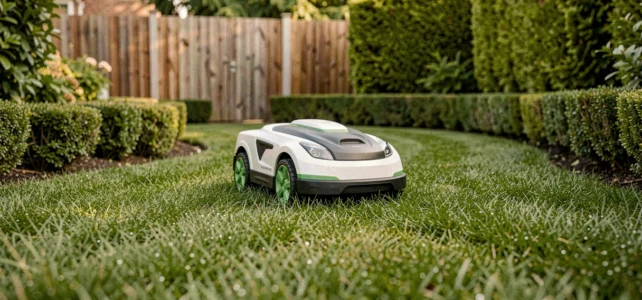
A robotic lawn mower priced at a few hundred euros and a model sold for over 2,000 euros share the same function: mowing a lawn without human intervention. The price difference between these two extremes depends on specific, measurable variables that are often underestimated at the time of purchase. This article details the factors that influence the budget of a robotic lawn mower, from the navigation system to the actual cost over several seasons.
Price Grid by Category of Robotic Lawn Mower
The purchase price primarily varies according to the area covered and the onboard navigation technology. The table below summarizes the price ranges observed in the French market.
| Category | Indicative Area | Navigation | Price Range |
|---|---|---|---|
| Entry-level | Small gardens (less than 500 m²) | Perimeter wire or basic sensors | Less than 800 euros |
| Mid-range | Medium gardens (500 to 1,000 m²) | Perimeter wire or beacons | 800 to 1,500 euros |
| High-end | Large areas (more than 1,000 m²) | RTK / GPS / vision-based navigation | 1,500 to 3,000 euros and beyond |
Models without perimeter wire (RTK, GPS, cameras) are concentrated in the high-end range. Their cost reflects the complexity of the positioning system, not just the mowing capacity.
Understanding the price of a robotic lawn mower requires going beyond just the catalog price. The onboard technology, consumables, and installation weigh as much as the displayed amount on the shelf.
Navigation Technology and Impact on Total Budget
The choice between perimeter wire, beacons, and RTK navigation not only changes the purchase price. It alters the installation cost and recurring expenses over the entire lifespan of the robot.
Perimeter Wire: Moderate Initial Investment, Maintenance Required
Installing a buried or surface-mounted cable defines the mowing area. This operation can be done by oneself, but professional installation represents a significant additional cost. The wire remains vulnerable to damage (shovel strikes, rodents), and each cut requires a repair intervention.
A damaged perimeter wire immobilizes the robot until the cut is located and repaired. Over several seasons, these occasional interventions add up.
RTK and Vision Navigation: High Purchase Price, Reduced Maintenance
Robots equipped with RTK or vision navigation (cameras, sensors) eliminate the need for a wire. Their purchase price is significantly higher. However, the absence of perimeter wire eliminates the costs of installation and wire repair. Some RTK models require a reference station, included or charged as an option depending on the brands.
Wireless navigation reduces long-term maintenance costs, partially offsetting the initial price gap for complex or large areas.
Cost of Ownership Over Five Years: Items Not Shown by Purchase Price
The price displayed in stores represents only a fraction of the actual budget. Over five years, several recurring items add up.
- Replacement Blades: with daily mowing, a set of blades generally lasts two to three months. Regular replacement constitutes the primary consumable expense.
- Replacement Battery: after a few years, the battery capacity decreases. Its replacement represents a cost that is difficult to anticipate, varying by brand.
- Additional Accessories: protective shelter, cleaning base, anti-theft device. These items, often sold separately, improve the robot’s longevity but increase the overall cost.
- Electricity Consumption: low compared to a gas mower, it remains a marginal item in the annual budget.
These accumulated items over several seasons significantly increase the bill compared to just the purchase price. A robot priced at 1,000 euros will therefore cost much more over time.
Insurance and Regulation: A Budgetary Aspect Rarely Addressed
Most buying guides overlook the insurance aspect. A robotic lawn mower is a motorized autonomous machine that operates in a garden, sometimes in the owner’s absence. The question of civil liability arises in the event of damage caused to a third party or property.
Checking with one’s insurer that the civil liability coverage of their home insurance policy includes incidents related to a mowing robot is a precaution often neglected. Some contracts exclude autonomous machines, which can expose the owner to unexpected costs in the event of a claim.
A call to one’s insurer before purchase allows for identifying any potential additional coverage costs or exclusions.
Purchase Timing and Negotiation: A Concrete Lever on Price
The robotic lawn mower market in France now exceeds 20% of the overall lawn mower market share. This rapid growth intensifies competition among manufacturers, which directly benefits buyers.
The most significant promotions appear outside of the peak season (spring). The periods from October to February concentrate on clearance sales and offers with installation included. Buying a robotic lawn mower during the peak mowing season almost always means paying full price.
Off-season, discounts and promotional bundles can significantly reduce the overall budget, installation included in some cases.
The determining criterion remains the match between the navigation technology and the terrain configuration. A perimeter wire model in a simple, flat garden will cost much less over five years than an oversized RTK robot for the same area. Conversely, a sloped or fragmented terrain justifies the investment in advanced navigation, whose additional cost will be compensated by reliability and reduced manual interventions.