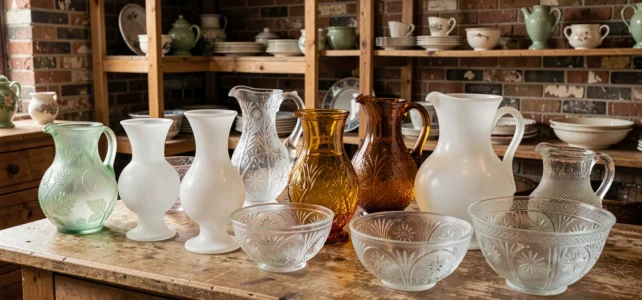
A Portieux Vallerysthal catalog is not just a simple commercial document. It is an identification tool that, in the hands of a knowledgeable collector, allows for dating a piece, confirming an attribution, and estimating a value. However, one must know how to distinguish an original catalog from a reissue, and especially how to properly utilize the plates to cross-reference information about shape, material, and production period.
Original catalog or reissue: criteria for documentary authentication
The confusion between original catalogs and recent reissues is the first trap for a collector. An original Portieux Vallerysthal catalog can be recognized by its internal references, period pricing, and terms of sale to wholesalers. These commercial mentions, often printed at the end of the booklet, never appear in modern reissues.
An original bears model numbers consistent with the production period. The prices in old francs, quantity discounts, and shipping conditions allow the document to be linked to a specific decade. A reissue reproduces the visual plates but omits these details deemed uninteresting to the general public.
We recommend systematically checking the binding, the paper weight, and the typography. A catalog from the 1930s features yellowed paper, printing in photogravure or lithography, and typefaces typical of the interwar period. A recent reproduction, even if well-made, betrays its age through the uniformity of digital printing and the whiteness of the material.
To deepen the identification of pieces based on historical plates, we direct you to the Portieux Vallerysthal catalog on Direct Habitat, which gathers useful resources for cross-referencing visuals and references.

Identification of Portieux Vallerysthal pieces through visual cross-referencing of plates
Reliable dating of a piece does not rely solely on the text of the catalog. The cross-referencing of shape, material, and plates remains the most reliable method. Very similar shapes can appear across several production periods, sometimes spaced decades apart.
Take the example of pressed crystal sugar bowls. A model with a scalloped lid exists in Portieux catalogs from the 1900s as well as in those from the post-war period. Only by comparing the molded decoration, the thickness of the glass, and the quality of the pressing can one make a distinction.
Three-step cross-referencing method
- Identify the general shape of the piece (footed glass, vase, sugar bowl, candy dish) and locate the corresponding plates in at least two catalogs from different periods
- Compare the details of molding or cutting: an identical pattern with sharper edges indicates an older production, as the mold wears over time
- Check the material (blown crystal, pressed crystal, opaline) by observing the translucency in light and the weight of the piece, then compare with the material indications in the catalog
This methodical approach avoids hasty attributions. A glass stamped “Vallérysthal” at a flea market may very well correspond to a model produced after the merger with Portieux, which alters its dating and sometimes its value.
Rare colors and signatures: what determines value in the vintage market
The vintage decor market places a significant premium on pieces featuring rare colors or a legible signature. Portieux opalines in unusual shades (pigeon’s throat, celadon green, salmon pink) trade significantly above classic white or blue shades.
Opaline lamps signed Portieux are among the most sought-after pieces. The signature, when it exists, is usually found under the base or on the lower edge of the reservoir. It may be acid-etched, molded into the mass, or affixed on a paper label (rarely preserved).
Elements that directly influence value
The presence of a model number corresponding to a catalog plate authenticates the piece and reassures the buyer. A documented piece in a period catalog is worth more than an isolated piece without reference.
The condition of the painted or enameled decoration is as important as the shape. On hand-decorated opaline pieces, slight signs of wear are accepted and even expected. In contrast, a redone or touched-up decoration decreases the value, as it prevents dating the piece by its ornamentation.
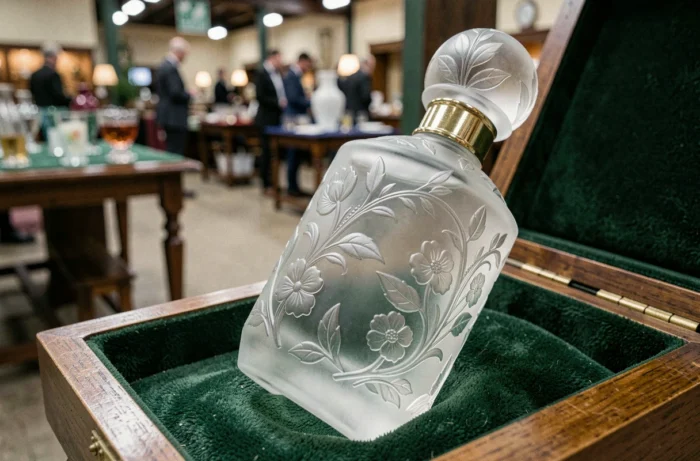
Utilizing Portieux Vallerysthal catalogs to build a coherent collection
A catalog is not only used to identify isolated pieces. It allows for the reconstruction of complete services by identifying all elements of the same series: water glasses, wine glasses, carafes, compotiers, and matching shaped pieces.
We observe that the most effective collectors work from a list of model numbers extracted from the catalog, which they then use as a search grid on auction platforms and at flea markets. This method transforms a random quest into targeted prospecting.
Catalogs also reveal the associations planned by the manufacturer. Some Portieux series were available in several colors with specific shaped pieces (butter dish, mustard pot, oil jug) that current resellers rarely offer together. Reconstructing a complete set from the plates gives the collection a documentary value that exceeds the sum of the individual pieces.
Patience remains the determining factor. Common pieces regularly appear on the market, but rare elements of a series (the matching tray, the figurative-handled sugar bowl) may require months of active searching before they present themselves.