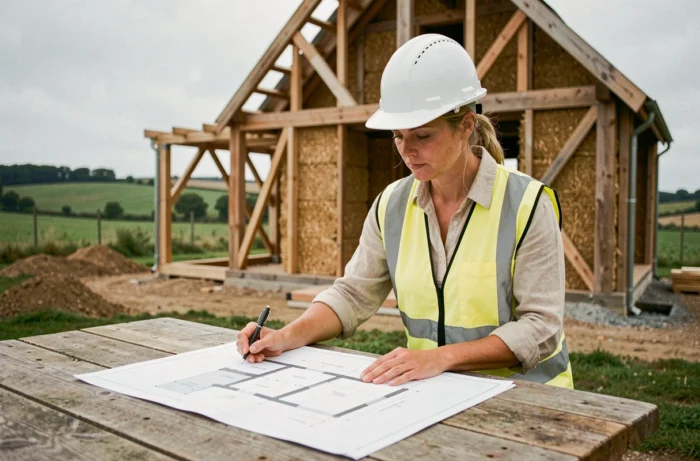
Hemp concrete used beyond R+2, environmental clauses that become mandatory in public contracts, RGE subcontracting regulated from 2027: sustainable construction in Brittany is no longer just a matter of intention. Regional sectors are structuring their practices around concrete regulatory constraints, and responsible construction projects are now viewed through their technical requirements.
Hemp Concrete in Brittany: Crossing the R+2 Threshold
The maturation of hemp concrete represents an operational turning point for the Breton construction sector. Thanks to new professional rules, this bio-sourced material is now used on sites exceeding R+2, according to the Breton Federation of Bio-sourced Sectors. We are observing a shift here: hemp is moving out of the individual housing market and into that of small collectives.
This evolution requires adjustments in structural design. Hemp concrete beyond R+2 requires a load-bearing framework sized accordingly, typically in wood or steel, with hemp providing the insulating fill and not load-bearing support. Breton engineering firms that master this mixed combination gain a competitive advantage in bio-sourced public tenders.
The Breton Federation of Bio-sourced Sectors, whose work is relayed on construirelabretagne.org, documents this technical progression and lists reference projects. For project owners, having local feedback on operations in R+3 or R+4 reduces perceived risk and facilitates prescriptions.
Environmental Clauses in Public Contracts: What Changes for Breton Construction
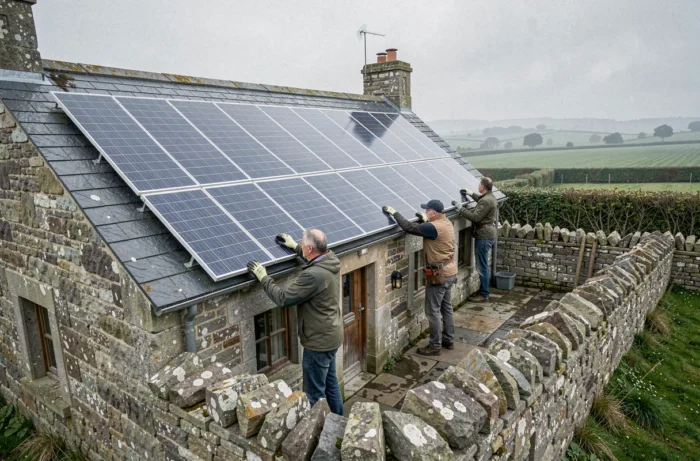
Fibois Bretagne reports the entry into force of new environmental obligations in public contracts, including a mandatory environmental execution clause. For Breton construction companies, the consequence is direct: responding to a construction or renovation tender without demonstrating a materials and waste strategy becomes a disqualifying factor.
We recommend that sector players prepare their technical memos by systematically integrating three elements:
- The origin and traceability of bio-sourced or reused materials, with certificates of compliance with current professional rules
- The construction site waste management plan, including local recovery channels and targeted reuse rates
- The environmental qualifications of the main company and its subcontractors, particularly the relevant RGE labels
This tightening of regional public procurement pushes the Breton wood sector to further structure itself. Local sawmills and processors that can provide environmental and health declaration sheets (FDES) for their wood products are favorably positioned against less documented national suppliers.
RGE Subcontracting and Energy Renovation: The 2027 Constraint
From January 1, 2027, the main company invoicing eligible work for aid must itself hold the RGE qualification, according to Actu-Environnement. Until now, subcontracting allowed unqualified companies to invoice energy renovation work by relying on an RGE subcontractor. This scheme will disappear.
The impact on supported Breton sites will be significant. Many small structures operate in energy renovation without directly holding the label. They will either need to pursue a qualification process or reposition themselves as subcontractors for qualified companies, reversing the current contractual relationship.
Anticipating the Restructuring of Business Groups
For sustainable renovation projects in Brittany, this rule modifies the composition of groups. The lead contractor of the group must necessarily hold the RGE qualification corresponding to the relevant lots. We are already observing consolidation movements: Breton general contractors are acquiring additional qualifications (insulation, carpentry, heating) to gain control of the main lot.
Public project owners in Brittany will need to adapt their selection criteria by verifying the qualification of the main contractor, rather than that of a secondary subcontractor. This enhances transparency but mechanically reduces the number of eligible candidates for certain technical lots.
Bio-sourced Materials Observatory: Driving the Transition through Data
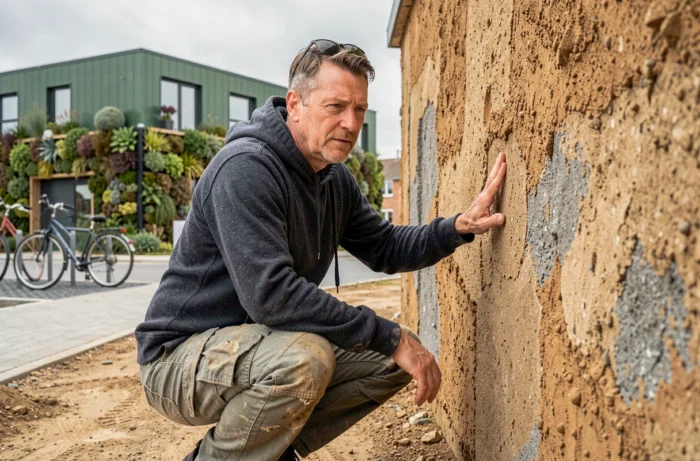
The DREAL Bretagne now publishes a more detailed territorial follow-up of low-carbon materials in new construction, via SITADEL data. This shift to a regional observation logic goes beyond simple statistical reporting: it provides local authorities and professionals with a concrete management tool.
The Breton Federation of Bio-sourced Sectors has also organized a webinar dedicated to presenting the bio-sourced materials observatory in the building sector in Brittany. This regional observatory allows for the identification of under-equipped territories in supply chains and directs investments towards the missing links in the chain (storage, processing, installation).
For actors in responsible construction, having localized data changes the nature of decision-making. Instead of prescribing a generic bio-sourced material, a project manager can check local availability of hemp, straw, or cellulose wadding, and adjust their choice based on the maturity of the nearest supply chain.
Sustainable construction in Brittany is now played out on precise regulatory and logistical levers. Professionals who anticipate the RGE 2027 framework, master the new public contract clauses, and leverage data from the regional bio-sourced materials observatory have a structural advantage over their less prepared competitors.