
The fetus perceives external sounds from the second half of pregnancy. This physiological fact changes the way we think about going to the cinema: the sound volume of a screening can reach levels comparable to those of an amplified concert, depending on the type of film and the format of projection. Going to the movies while pregnant is not a problem in itself, but a few parameters deserve to be understood before choosing a session.
Sound Level in the Theater and Fetal Hearing
The French Health Insurance reminds us that exposure to loud noises during pregnancy can harm the developing baby’s hearing. The fetus is not as isolated by amniotic fluid as one might think: low frequencies, which are very present in the soundtracks of action or science fiction films, pass through maternal tissues with little attenuation.
Immersive formats (IMAX, Dolby Atmos, theaters equipped with additional subwoofers) amplify this phenomenon. The issue is not the dialogue between two characters, but the sound peaks during explosions, chases, or sudden musical crescendos. These volume spikes are difficult to anticipate and can last several minutes.
In practice, the topic of cinema and pregnant women often boils down to a trade-off between the genre of the chosen film and the projection format. A drama in a standard theater exerts much less pressure on the fetal auditory system than a blockbuster in IMAX.

Choosing the Film and Projection Format: What Really Matters
The genre of the film largely determines the level of sound risk. A family animated film or a romantic comedy generates a relatively stable volume, without sudden peaks. In contrast, war films, thrillers with sound effects, and disaster movies combine powerful low frequencies with unpredictable volume variations.
The projection format weighs as much as the film itself. A standard screening in a medium-sized theater remains more moderate than a session in a premium format. Choosing a classic theater mechanically reduces the overall sound intensity.
Another often overlooked criterion is the timing. Daytime screenings, which are less crowded, allow for choosing a seat away from the side and rear speakers. Sitting in the center of the theater, a few rows behind the middle, generally offers the best sound balance, with less direct acoustic pressure.
Physical Comfort During the Screening: Posture, Circulation, and Temperature
Sitting in a cinema seat for two hours poses specific constraints starting from the second trimester. The weight of the uterus compresses the inferior vena cava during prolonged sitting, which can cause feelings of discomfort, heavy legs, or dizziness.
- Tilting the backrest slightly and placing a rolled-up garment in the small of the back relieves pressure on the pelvis and lower back.
- Crossing and uncrossing the ankles regularly, or placing feet on a bag on the floor, promotes venous return in the legs.
- Getting up discreetly once during the screening (for example, during a bathroom break) is enough to restart circulation and prevent cramps.
The air conditioning in theaters is an underestimated factor. During periods of high heat, French health authorities remind us that pregnant women are particularly vulnerable to dehydration and discomfort related to temperature fluctuations. Transitioning from a street over 30 degrees to an air-conditioned room at 20 degrees causes thermal shock that can trigger temporary contractions, especially in late pregnancy.
Bringing a bottle of water and a light jacket helps manage these two risks without complicating the outing.
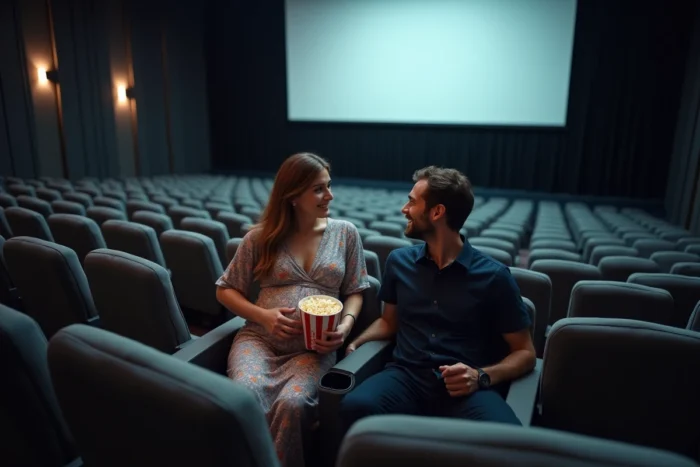
Parent-Friendly Screenings: An Overlooked Option
Some cinemas offer special “babies welcome” screenings, with reduced sound volume and dimmed lighting maintained in the theater. These slots, initially designed for young parents accompanied by infants, are also suitable for pregnant women in late pregnancy.
The principle is simple: the sound is lowered several notches compared to a standard screening, ambient noise tolerance (crying, movement) is total, and no one is surprised to see someone get up in the middle of a session. This format eliminates most of the stressors associated with cinema during pregnancy.
These screenings are not available everywhere. They rarely appear on the homepage of booking sites and are more likely to be found in the “events” or “special screenings” sections of independent cinemas and some major chains. A direct call to the theater remains the most reliable way to check their availability.
When to Postpone the Screening to Postpartum
Some situations make going to the cinema inadvisable, not by principle but for basic comfort:
- Pelvic pain or sciatica that prevents sitting for more than twenty minutes without changing position.
- A pregnancy beyond the 36th week with a frequent need to urinate (every 15 to 20 minutes), making any screening longer than an hour difficult to follow.
- A recent episode of contractions or a resting order given by the healthcare professional monitoring the pregnancy.
Postponing does not mean giving up. Several testimonies from pregnant women indicate that a comfortable screening in the second trimester is better than a laborious outing a few weeks before the due date. The third trimester concentrates postural discomfort, increased urinary frequency, and sensitivity to temperature variations.
Going to the cinema during pregnancy does not present any formal medical contraindications. The only truly modifiable variable remains the choice of film, format, and timing, three parameters that alone determine the sound level experienced and the overall comfort of the session.