The Breton news covers an administrative territory of four departments (Côtes-d’Armor, Finistère, Ille-et-Vilaine, Morbihan) where agricultural, environmental, cultural, and economic issues specific to the region intersect. Following this news requires distinguishing between structural facts, those that permanently change the daily lives of residents, and simple information flows.
Agricultural regulation in Brittany: what changes since September 2026
A decree from August 27, 2026, established a five-year experiment, effective from September 1, 2026, that profoundly modifies nitrogen management for Breton farms. The obligation to establish a forecast fertilization plan is eliminated in favor of measures based on nitrogen residual analysis at the beginning of drainage.
This change in method does not only concern operators. It redefines how administrative controls are conducted. Rather than a uniform framework applied to all plots, the doctrine refocuses on farms deemed most likely to release nitrates, particularly in watersheds affected by green algae.
According to the published texts, the reinforced rules target about one-fifth of the regional agricultural area, particularly the most fragile environments. Grass strips and certain sensitive areas are subject to targeted tightening. For Breton farmers, this reform imposes new soil analyses but, in return, eases the administrative burden related to forecast fertilization.
Those who regularly follow the news on Bretagne Info will find details of these regulatory developments as they are implemented on the ground.
Green algae in Brittany: a fight that changes philosophy

The proliferation of green algae on the Breton coasts remains one of the most visible environmental markers of the region. The reform published at the end of August 2026 marks a turning point in the state’s approach, compelled by the judiciary to strengthen its fight.
The chosen principle abandons the homogeneous treatment of the problem. Controls now focus on farms identified as major sources of nitrates, rather than spreading the effort across the entire Breton agricultural territory. This more targeted method relies on field data (water analyses, discharge history) rather than solely on declarative criteria.
For the coastal municipalities of Finistère and Côtes-d’Armor, the issue goes beyond just agriculture. Green algae affect beach tourism, shore fishing, and the quality of life of local residents. Monitoring this policy will be a recurring theme in Breton news in the coming months.
Cultural events and festivals in Brittany: calendar and trends
Brittany has one of the highest densities of festivals in France. Music, street arts, maritime heritage: the regional programming structures a significant part of the local economy, particularly in Morbihan and Finistère.
- Music festivals concentrate their programming between June and September, with peaks in attendance in Finistère and Morbihan.
- The Heritage Days allow access to sites usually closed, from Rennes to Brest, passing through Lorient and Saint-Malo.
- Events related to maritime heritage (sea festivals, gatherings of old rigs) remain a distinctive cultural marker of Brittany compared to other regions.
The Breton cultural agenda also acts as a economic lever for rural municipalities, which capture part of the summer tourist flow thanks to these events.
Abalone fishing in Brittany: regulation 2026
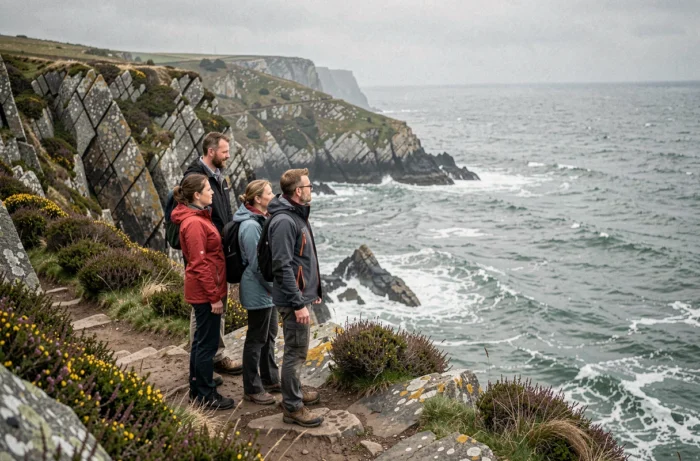
A prefectural order from July 30, 2026, harmonized the opening periods for abalone fishing along the entire Breton coastline. This regulatory change, which often goes under the radar of mainstream media, directly concerns shore fishermen and enthusiasts of spring tides.
The harmonization means that the opening dates, previously variable from one sector to another, now follow a unique regional framework. Fishermen must check the authorized periods before any outing, under penalty of sanctions. The abalone resource remains fragile, and catches are closely monitored by maritime affairs.
This measure illustrates a recurring theme in Breton news: local regulatory decisions that modify practices entrenched for decades. The subject mobilizes coastal communities each year, particularly in Finistère and Côtes-d’Armor.
Brittany’s economy: regional indicators to watch
The publication “Key Figures Brittany 2026,” highlighted by Bretagne Économique, serves as a reference tool for analyzing the strengths and challenges of the territory. This type of document compiles data on employment, demographics, agriculture, tourism, and industry across the four departments (Ille-et-Vilaine, Côtes-d’Armor, Morbihan, Finistère).
Rennes and Brest concentrate most of the metropolitan dynamics, but medium-sized cities like Lorient, Vannes, or Saint-Brieuc play a structuring role for territorial balance. Breton economic news is also read through agri-food sectors, shipbuilding, and digital technology, three areas where the region occupies a unique position on a national scale.
Following Breton news beyond the daily flow means spotting these underlying signals: an agricultural regulation shifting, an environmental policy under judicial constraint, a dense cultural fabric that nourishes the local economy. Decisions made in 2026 regarding nitrogen and green algae will produce measurable effects within three to five years, long after the headlines of the moment.