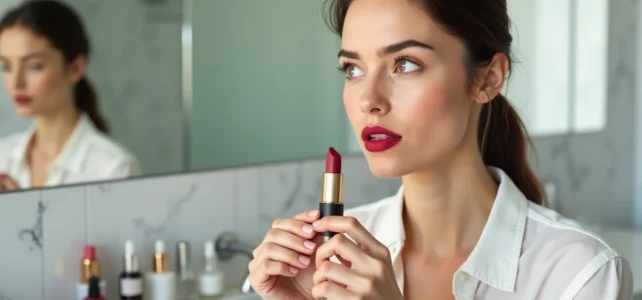
A rumor that lipsticks contain whale fat has been circulating for years on social media and in conversations. It is based on an old reality, but the current situation of cosmetic formulations has nothing to do with that of the last century.
Spermaceti and cosmetics: why the confusion persists
The link between whale and lipstick is not a total invention. For a good part of the 20th century, the cosmetic industry used spermaceti, a wax extracted from the cranial cavity of the sperm whale. This substance provided a soft texture and excellent stability to lipstick and balm formulas.
The current confusion comes from there. Spermaceti did indeed exist in cosmetic laboratories. Its ban dates back to 1972, the date of the International Convention for the Regulation of Whaling. Since then, no legal formulation contains whale fat in the signatory countries.
What maintains the doubt is the presence of other animal-derived ingredients in current lipsticks. Beeswax, lanolin (sheep wool fat), or animal-derived squalane still appear in some formulas. To better understand the use of whale fat in lipstick and its historical context, it is necessary to distinguish these common animal raw materials from spermaceti, which has been definitively excluded.

INCI list of lipstick: what current formulas contain
A classic lipstick relies on three families of ingredients. Each plays a specific role in the hold, color, and comfort of the product.
- Structuring waxes give the stick its solid shape while allowing it to melt upon contact with the lips. We find candelilla wax, carnauba wax, beeswax, or synthetic waxes like ozokerite.
- Oils and fats provide slip and hydration. Vegetable oils (castor, jojoba, sunflower) have largely replaced animal fats in modern formulations, including non-certified organic ranges.
- Pigments and dyes ensure the shade. Some are mineral (iron oxides, titanium dioxide), while others are synthetic. Carmine, an intense red pigment, comes from cochineal, an insect, which raises questions for vegan consumers.
Are you looking for whale fat in this list? It is not there. Spermaceti does not appear in any authorized INCI nomenclature for cosmetics sold in Europe.
Effective plant and synthetic substitutes
The industry did not simply remove spermaceti. It replaced it with alternatives that have equivalent or even superior properties. Jojoba oil replicates the texture of spermaceti with comparable stability. Vegetable wax esters offer the same silky feel as sperm whale wax without posing regulatory or ethical issues.
The shift to these substitutes has been gradual, long before the demand for vegan or cruelty-free products became a marketing argument. The primary reason was regulatory and economic, not ideological.
Fragrance allergens in lipsticks: real regulatory vigilance in 2026
If whale fat is no longer a topic for health authorities, other components are attracting the attention of European regulators. Starting July 31, 2026, a major change will take effect for any new lipstick launched on the EU market.
The list of fragrance allergens to declare increases from 26 to 82 substances, in accordance with an update to the European regulation on cosmetic products. For leave-on products like lipsticks, the declaration threshold is set at 0.001%.
In practical terms, this means that the INCI list printed on your tube will become longer. Fragrance substances present in minute quantities will need to be explicitly named. This evolution shows where the real concern of the authorities lies: fragrance allergens, not historical animal fats.
Reading the INCI label of a lipstick
Have you ever turned a lipstick tube over to decipher the ingredient list? The INCI nomenclature classifies components in descending order of concentration. The first names correspond to the major ingredients.
To spot an animal-derived ingredient, look for the following terms: “cera alba” (beeswax), “lanolin” (lanolin), “carmine” (cochineal). If these terms are problematic for you, opt for lipsticks with a certified vegan label.
Vegan or organic lipstick: how to distinguish reliable labels
The mention “without whale fat” on a lipstick has no informative value, since this fat has been banned for over fifty years. It’s a bit like stating “asbestos-free” on a can of paint. A certified vegan label guarantees the absence of any animal ingredient, including beeswax and carmine.
The organic label, on the other hand, does not necessarily mean vegan. An organic lipstick may contain beeswax or lanolin. The two approaches address different concerns: one focuses on the animal origin of the components, while the other concerns the cultivation and processing methods of plant raw materials.
Consumers who wish to avoid any animal-derived product in their lipstick should check the certification rather than marketing claims. The traceability of cosmetic ingredients is improving, but it remains uneven depending on brands and distribution channels.
Current formulas rely on plant waxes, oils, and pigments governed by increasingly strict European standards. The real issue for the coming years concerns fragrance allergens and the transparency of INCI lists, not the return of spermaceti.