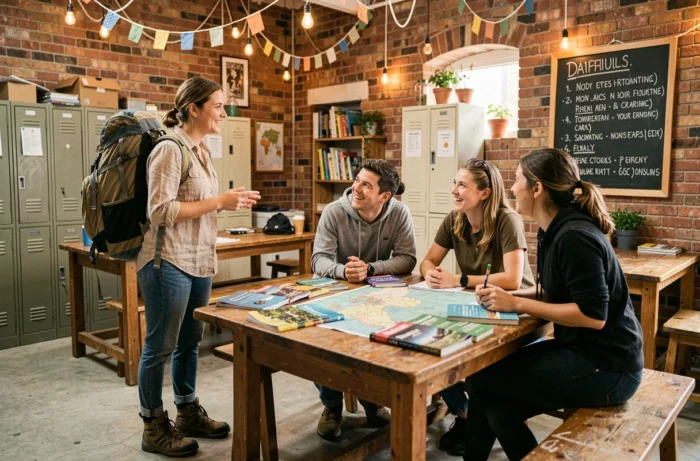
Between the European regulatory pressure on short-term rentals and the upgrading of hybrid hostels, the landscape of accommodation accessible to young travelers is changing. What types of accommodation offer the best balance between cost, flexibility, and experience for an adventurous audience? This article compares the main options available in Europe and beyond, considering recent market developments.
European Regulation of Short-Term Rentals: What Changes for Young Travelers
The European Union unveiled a plan in 2026 to regulate short-term rentals in so-called “pressure zones.” A pressure zone is defined, among other things, by a housing price to disposable income ratio equal to or greater than eight years of income, increasing over ten years with no anticipated improvement over three years.
Specifically, cities meeting these criteria will be able to impose quotas, caps on nights, a freeze on new registrations, or restrictions on purchases for tourist use, for periods of up to five years. Primary residences remain generally protected (renting a few weeks per year allowed), with restrictions mainly targeting properties dedicated exclusively to tourism.
Since May 2026, rental platforms must also share more data with authorities. For an adventurous young traveler, the direct consequence is simple: in several major European cities, finding an entire apartment in the city center is becoming more difficult. This context strengthens the role of youth hostels, hybrid hostels, and off-season student residences as accessible alternatives.
Among the accommodations offered by Jeunes Voyageurs, several options take these developments into account and guide towards solutions compliant with local regulations.
Comparison of Accommodation Types for Adventurous Travelers
The choice of accommodation depends on several variables: budget, sociability, comfort, access to nature. The table below summarizes the characteristics of the main options available for a young and mobile audience.
| Type of Accommodation | Indicative Budget | Sociability | Access to Nature/Adventure | Booking Flexibility |
|---|---|---|---|---|
| Classic Youth Hostel | Low | Very High | Variable (mainly urban) | High |
| Hybrid Hostel (co-living) | Low to Moderate | High | Variable | High |
| Camping / Bivouac | Very Low | Moderate | Very High | Very High |
| Glamping | Moderate to High | Low to Moderate | High | Moderate |
| Short-Term Rental (like Airbnb) | Moderate | Low | Variable | Decreasing (regulation) |
| Off-Season Student Residence | Low | Moderate | Low | Seasonal Only |
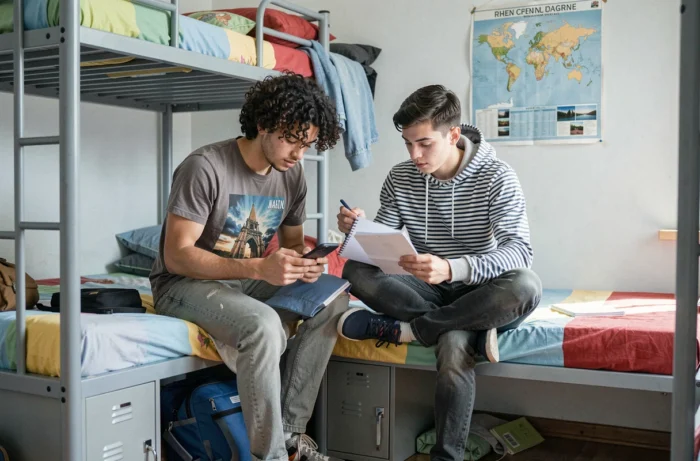
Several gaps emerge from this grid. Sociability, often a priority for young travelers, strongly favors hostels and hybrid hostels. In contrast, direct access to outdoor activities (hiking, kayaking, climbing) leans towards camping and glamping.
Youth Hostels and Hybrid Hostels: The Gap Widens
Traditional youth hostels, affiliated with networks like Hostelling International or HI France, maintain the advantage of price and a dense territorial network. Some occupy remarkable locations: medieval castles, historic buildings, mountain lodges. The HI network, for example, offers establishments located in a castle in Bacharach, Germany, or at the foot of Mount Snowdon in Wales.
Hybrid hostels, which have emerged in recent years, combine dormitories, coworking spaces, and social programming (local cooking classes, group outings). Their pricing is slightly higher than classic hostels, but they attract an audience seeking both social connection and comfort.
The gap between these two models is also reflected in digital services. Hybrid hostels rely on booking apps with community filters (traveler profile, interests), while traditional hostels still largely operate through classic booking centers.
Camping, Bivouac, and Glamping: Adventure Accommodation in Nature
For travelers whose adventure takes them to mountains, countryside, or secluded beaches, camping remains the most economical and flexible option. In France and across Europe, bivouacking is often tolerated outside protected areas, provided local regulations are respected.
Glamping occupies a different niche. Its cost sometimes approaches that of a hotel room, but it offers a nature immersion with a higher level of comfort (furnished tents, yurts, cabins). Three criteria can help differentiate these options:
- Daily Budget: wild camping or camping in natural areas costs a fraction of glamping, which can reach the price of a classic urban accommodation
- Level of Autonomy: bivouacking requires complete personal equipment (tent, stove, water filtration), while glamping provides everything on-site
- Accessible Destinations: camping opens routes in the mountains, by the sea, or in remote countryside, while glamping focuses on developed sites, often near established tourist destinations
Off-Season Student Residences: An Underappreciated Option in Europe
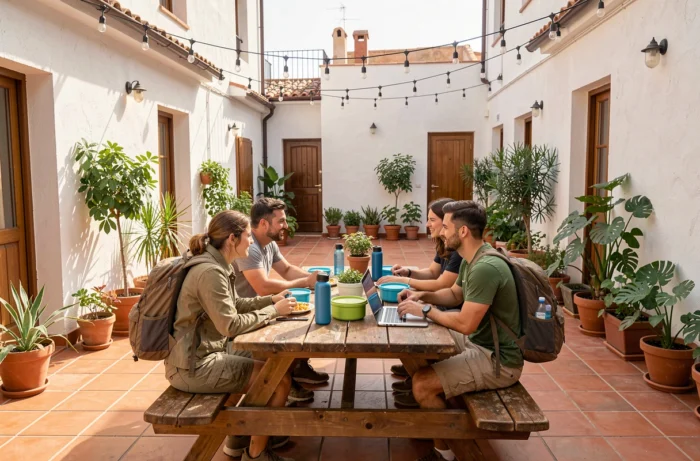
During the summer holidays, many European university residences open their rooms to travelers. This option, not widely visible on major booking platforms, offers rates comparable to those of youth hostels, with the advantage of a private room.
Off-season student residences target a specific niche: solo travelers or small groups, stays from a few days to a few weeks, in university towns. The trade-off is strictly seasonal availability and often minimal comfort.
In France, several cities offer this type of accommodation through CROUS or private operators. In other European countries, the operation is similar, with varying opening periods depending on the local academic calendar.
Ultimately, the choice between these different options depends on what each traveler prioritizes: budget, social interaction, nature immersion, or flexibility. The regulatory pressure on short-term rentals is reshuffling the cards and pushing young adventurers towards collective or outdoor accommodations, two segments that are gaining quality and diversity each year.